- Puzzle guide
- Habits
- Older adults
Brain teasers for older adults: easy, enjoyable daily habits
A daily puzzle can be one of the small pleasures of the day. A few easy habits keep it comfortable, fun and a bit more sociable, for you or for someone you love.
 By JPott Studios
About a 5 minute read
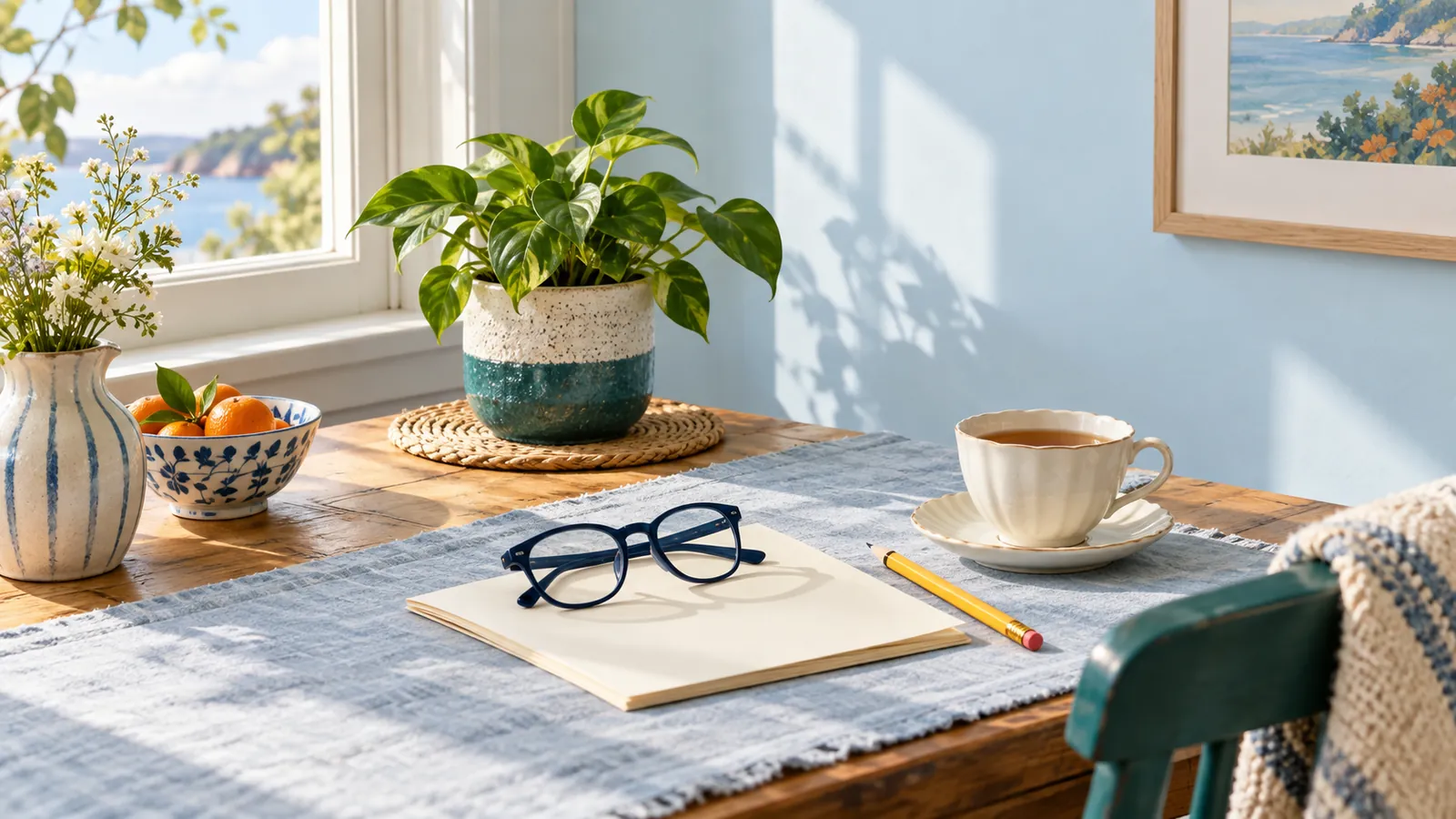
Brain teasers for older adults don't have to be special puzzles. Pick the ones you look forward to, then set them up so they're easy on the eyes, the hands and the wallet. Some people have done the crossword with their morning coffee for fifty years. Others find puzzles later, on a tablet a grandchild set up, or in a large-print book from the library.
This guide is about making that habit comfortable and fun. It isn't about health. Puzzles are a pastime, not a treatment, and we won't claim they do anything for memory. If you're worried about memory or thinking, the right person to talk to is a doctor.
Which brain teasers for older adults are best?
The ones you enjoy. Words, numbers, pictures and shapes all make good puzzles, and most people have a favourite. If crosswords feel like a chore but you love a jigsaw, follow the jigsaw. Enjoying it is what makes a habit last.
It's nice to keep one familiar puzzle and one new one. The familiar one is comfortable, and the new one keeps things interesting. For ideas, browse our roundup of daily puzzle games like Wordle or our list of calm logic puzzles for adults.
How do you make puzzles easier to see and hold?
Small changes to size, light and grip make more difference than you'd expect.
- Go bigger. Large-print puzzle books are easy to find. On a phone or tablet, turn up the text size in the device's settings, and choose games with boards big enough to tap without squinting.
- Use a tablet if you can. For grid puzzles it's often much easier than a phone.
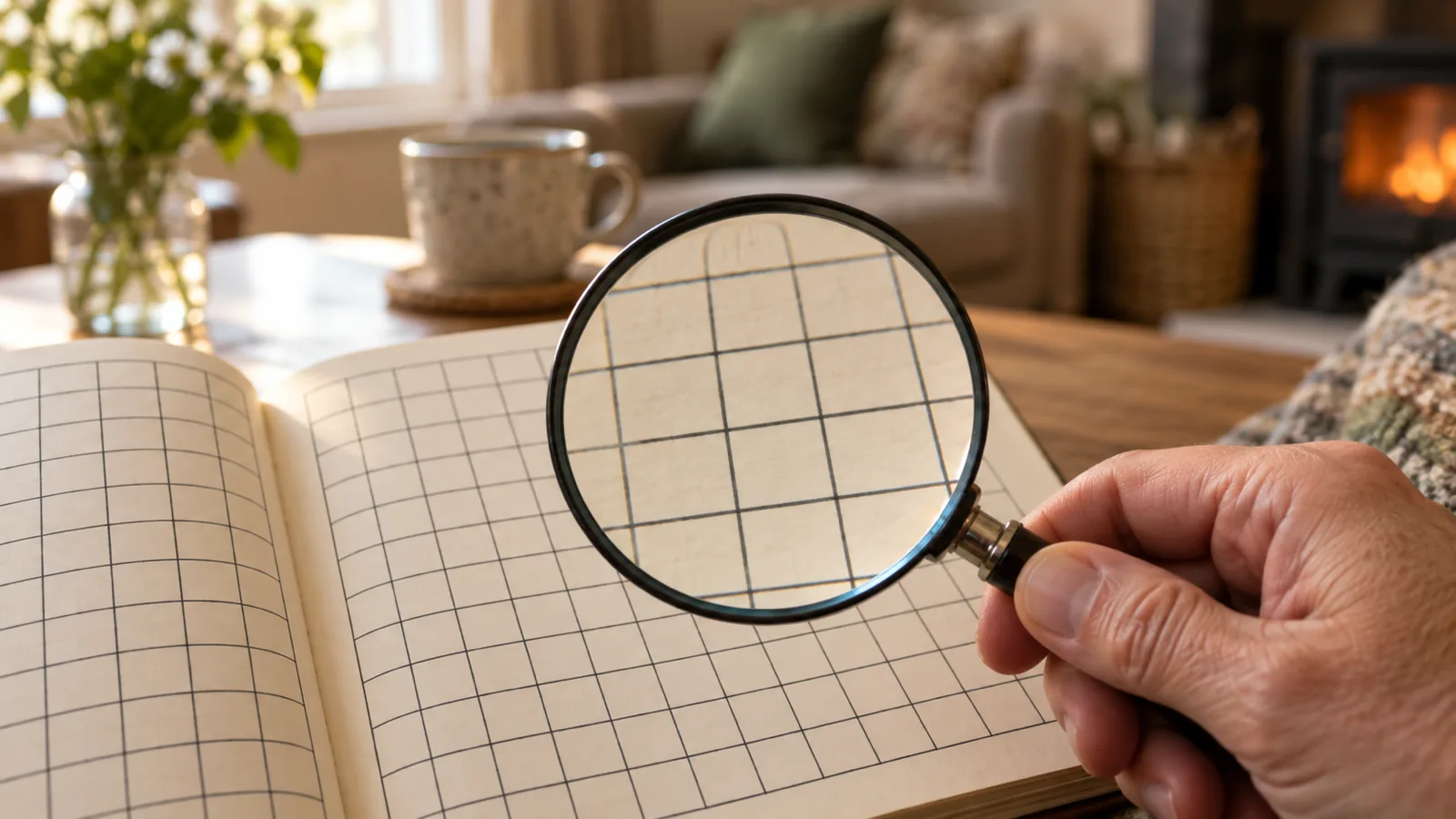
- Get the light right. Sit with light falling on the page or beside the screen, not behind it. Reading glasses at the right strength make a big difference.
- Rest your eyes. Look up and across the room every so often, and take a short break when your eyes feel tired.
- Mind your hands. If tapping small squares is fiddly, a stylus can help. A game that lets you drag, or tap one square at a time, is easier than one that needs precise swipes.
- Don't rely on colour alone. Many people see some colours less clearly, so games that also use numbers, letters or shapes are kinder to everyone.
Colour is never the only clue
Three ends from a free Linelet board, in colour and in greyscale.
How to spot a puzzle app that treats you kindly
Some puzzle apps are built to keep you tapping and paying. Watch out for:
- adverts that pop up between puzzles, or that are easy to tap by mistake
- countdown timers you can't turn off
- "lives" or "energy" that run out and ask you to wait or pay
- repeated offers to buy coins, hints or bundles
- subscriptions that are easy to start and hard to find again to cancel
A paper puzzle book, a newspaper puzzle or an app with one clear price and no adverts is usually far more relaxing. Setting up an app for a parent or grandparent? Have a look through its shop screen first.
Calm, or built to keep you paying?
What to look for before a puzzle becomes a habit.
Usually far more relaxing
- A paper puzzle book
- A newspaper puzzle
- An app with a single clear price and no adverts
Watch out for
- Adverts between puzzles, or easy to tap by mistake
- Countdown timers you cannot turn off
- "Lives" or "energy" that run out
- Repeated offers to buy coins, hints or bundles
- Subscriptions that are hard to cancel
Make it a small ritual
A habit sticks best when it hangs on something you already do, like morning tea or the first quiet moment after lunch.
Keep it short. One puzzle is plenty, and it's nice to finish feeling you'd happily do another tomorrow. Missing a day is fine too. A puzzle habit isn't a test, and if an app makes you feel guilty for skipping a day, it may not be the right app. Our calm daily puzzle routine has more ideas for fitting one in.
From JPott Studios
One calm email a month
One useful tip, one free printable or tool, and a short note from our apps. Join and get the free welcome pack: printable trackers, a packing list maker and more.
Puzzling with family and friends
Puzzles are often more fun shared. A few ideas:
- Do the same daily puzzle as a friend or relative and compare notes by phone or message. Many daily games let you share your result without spoiling the answer.
- Work on one with a grandchild. Children are often quick with shapes, and happy to be the one explaining.
- Look for a puzzle or games group at a library, community centre or place of worship.
- Leave a puzzle book on the table when visitors come. It's a gentle way to get talking.

Knowing when to stop
If a puzzle is making you frustrated, put it down. There's always another one. Coming back after a break often makes the answer obvious, and if it doesn't, looking up the solution is allowed. You're doing this to enjoy yourself.
A quiet option to try
If you like shapes more than words, you might enjoy a line puzzle. In Linelet, you join matching ends with lines of exactly the right length until every square is filled. Every end carries a number and a shape as well as a colour. There's no clock on screen while you play and no adverts, and you get two free hints on each board when you're stuck.
You can play today's free Linelet puzzle in your browser before deciding anything, or read how to solve number line puzzles for a gentle walk-through. The Linelet home page has the rest.
From JPott Studios
One calm email a month
One useful tip, one free printable or tool, and a short note from our apps. Join and get the free welcome pack: printable trackers, a packing list maker and more.